


Mads Jensen argues that whether generative AI startups have a technology moat matters less than many VCs think, because successful SaaS companies build defensibility over time through platforms, network effects and proprietary data.
- Defensibility matters in venture capital because businesses without it quickly lose their margins to new competitors.
- Strong SaaS companies build moats by becoming platforms at the centre of an ecosystem, creating network effects and acquiring proprietary data sets.
- These moats are rarely technology moats such as patents or code that cannot be copied; most software can be copied.
- Mads Jensen expects many generative AI startups, including those OpenAI has invested in, to do well whether or not their first algorithm is defensible.
VC’s are busy discussing whether generative AI companies have a defensive moat.
Many startups use open-source or open APIs to build their apps. Isn’t that easy for others to copy? Does this mean that they have a “real moat”?
Defensibility is important in venture capital. Many investments fail, and this necessitates high returns on those that succeed. Businesses with no defensibility quickly lose their margin to new competitors. Yet successful SaaS companies operate with high margins. So they must have some defensibility.
Where does defensibility come from?
Strong SaaS companies develop powerful moats over time. Here are some of the ways they do this
- Become platforms that sit at the centre of an ecosystem.
- Create network effects that are hard to replicate.
- Acquire proprietary data sets that make their algorithms more powerful.
Sometimes this is part of the launch strategy. Sometimes it evolves organically. But whatever it is, it isn’t a “technology moat” in the sense of patents or code that can’t be replicated.
Do Ai startups have a moat?
So back to generative Ai startups. Do they have a moat?
Maybe they do. Maybe they don’t. Maybe it doesn’t matter right now. At least not as much as some people think.
Most software can be copied. It’s rarely just the tech that helps early-stage companies beat the competition.
And while some VCs are busy having the wrong discussion, others are making hay.
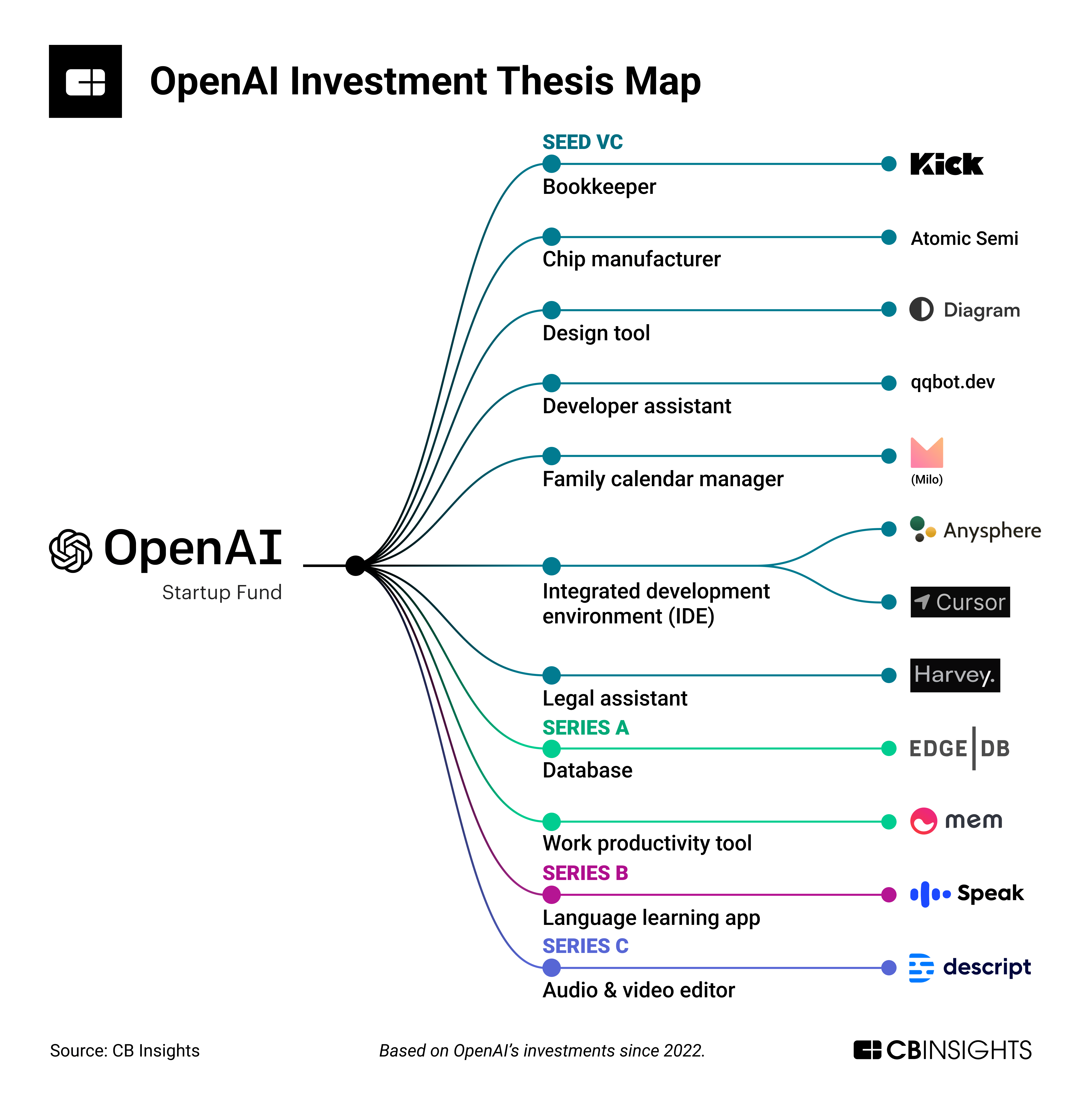
OpenAI (maker of ChatGPT) have just gone ahead and invested in a bunch of cool AI startups (see chart – courtesy of CBInsights).
My expectation is that many of these companies will do just fine. Whether or not the initial algorithm is defensible. Because building a SaaS company is so much more than just the first product.
So many opportunities opening up with generative AI. What an exciting year we have ahead of us!
Frequently Asked Questions
Do generative AI startups have a defensive moat?
Maybe or maybe not, and Mads Jensen argues it matters less than people think at the early stage. Building a SaaS company involves much more than the first product, and defensibility usually develops over time.
Where does defensibility in SaaS come from?
From becoming a platform at the centre of an ecosystem, creating network effects that are hard to replicate, and acquiring proprietary data sets that make algorithms more powerful, rather than from patents or code.